
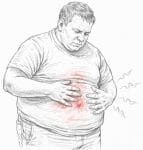
The relationship between obesity and gastroesophageal reflux disease is one of the most robustly established associations in gastrointestinal epidemiology, supported by consistent findings from population-based cross-sectional surveys, prospective cohort studies, and interventional trials demonstrating that excess body weight, particularly the central adiposity pattern characteristic of abdominal obesity, powerfully increases the risk of developing GERD, worsens the severity of reflux symptoms, increases the likelihood of GERD complications including erosive esophagitis and Barrett esophagus, and predicts poorer response to pharmacological anti-reflux therapy. The clinical importance of this relationship extends beyond the observation that two prevalent conditions happen to coexist at elevated rates in the same individuals, to the mechanistic insight that the physiological consequences of abdominal obesity directly create the conditions for pathological gastroesophageal reflux through multiple simultaneous mechanisms that collectively overwhelm the normal anti-reflux barrier even in individuals without the intrinsic sphincter dysfunction that characterizes many GERD patients.
The global obesity epidemic, which has produced a tripling of obesity prevalence in most developed countries over the past four decades and has spread through rapidly industrializing countries whose epidemiological transitions have brought Western dietary patterns and sedentary lifestyles to previously lean populations, has driven a parallel increase in GERD prevalence, severity, and complications that represents one of the most important public health consequences of the obesity crisis beyond the more widely publicized cardiovascular and metabolic consequences. The association between the rising prevalence of both obesity and GERD has been accompanied by a dramatic increase in the incidence of esophageal adenocarcinoma, the cancer most directly linked to chronic GERD-induced Barrett esophagus, whose incidence has increased more than six-fold in Western countries since the 1970s in a trend that directly mirrors the obesity epidemic and implicates obesity-related GERD as a primary driver of this rising cancer burden.
The clinical implications of obesity as a cause and exacerbating factor in GERD are profound and have important therapeutic ramifications, because they establish weight management as a primary rather than adjunct component of GERD management in obese patients and suggest that bariatric surgical procedures producing sustained substantial weight loss may be the most effective long-term treatment for GERD in severely obese patients. The mechanistic understanding of how abdominal obesity generates pathological gastroesophageal reflux through elevated intra-abdominal pressure, altered gastroesophageal junction anatomy, promoted hiatal hernia formation, and the direct hormonal and inflammatory effects of adipose tissue on gastrointestinal motility provides the physiological rationale for weight-centered therapeutic approaches and guides the clinical management of the growing population of patients with obesity-related GERD.
Elevated Intra-Abdominal Pressure as the Primary Mechanism
The primary mechanism through which abdominal obesity generates and exacerbates gastroesophageal reflux is the chronic elevation of intra-abdominal pressure produced by the mechanical compression of intra-abdominal and retroperitoneal adipose tissue on the abdominal viscera and the distension of the abdominal cavity beyond its normal elastic capacity. Unlike the transient, phasic increases in intra-abdominal pressure produced by coughing, sneezing, physical exertion, and the Valsalva maneuver that challenge anti-reflux barrier function intermittently, the pressure elevation of abdominal obesity represents a sustained baseline elevation of the mechanical environment that the lower esophageal sphincter must continuously overcome to maintain gastroesophageal competence.
The elevated intra-abdominal pressure of abdominal obesity is transmitted to the intragastric pressure, increasing the pressure differential between the stomach and the esophagus that the lower esophageal sphincter must generate sufficient pressure to overcome. When intragastric pressure chronically exceeds lower esophageal sphincter resting pressure or when transient lower esophageal sphincter relaxations occur in the context of elevated intragastric pressure, the volume and frequency of reflux events increases beyond what would occur at normal intragastric pressures, producing greater esophageal acid exposure and correspondingly greater mucosal injury. Manometric studies comparing lean and obese GERD patients consistently demonstrate higher gastroesophageal pressure gradients in obese individuals, validating the mechanical model of obesity-related reflux augmentation and quantifying the degree to which abdominal adiposity shifts the pressure balance in favor of reflux.
The pattern of fat distribution within the abdomen is a more specific determinant of GERD risk than total body adiposity, with visceral adiposity that accumulates in the mesenteric and retroperitoneal compartments surrounding and compressing the abdominal organs producing greater intra-abdominal pressure elevation than subcutaneous adiposity that accumulates in the abdominal wall without directly compressing the viscera. This mechanistic specificity explains why waist circumference and waist-to-hip ratio, which measure abdominal girth as a proxy for central adiposity, are stronger predictors of GERD risk than body mass index, which reflects total body adiposity without distinguishing its distribution. Population studies have confirmed this anatomical specificity, with some studies demonstrating that the association between body weight and GERD is substantially stronger for central obesity measures than for body mass index alone, and that individuals with high body mass index but predominantly peripheral fat distribution carry lower GERD risk than those with similar body mass index but predominantly central adiposity.
The increased frequency of transient lower esophageal sphincter relaxations, the primary reflux mechanism even in patients without resting hypotension of the sphincter, is promoted by abdominal obesity through the exaggerated gastric distension that accompanies the elevated resting intragastric volume and pressure of obese individuals and that is a powerful physiological trigger for vagally mediated transient relaxations. The mechanoreceptors in the proximal stomach that initiate the reflex arc producing transient lower esophageal sphincter relaxations are activated by gastric wall stretch, and the chronically elevated intragastric pressure of abdominal obesity maintains these mechanoreceptors in a state of sustained partial activation that lowers the threshold for triggering transient relaxations in response to additional gastric distension from meals, beverages, and swallowed air. This mechanism explains why obese patients with GERD characteristically experience more frequent reflux episodes postprandially and why meal-related reflux symptoms are often more severe and more prolonged in obese than in lean GERD patients.
Hiatal Hernia Formation and Anatomical Disruption
Abdominal obesity promotes the development of hiatal hernia, which markedly worsens the severity of gastroesophageal reflux by disrupting the anatomical components of the anti-reflux barrier beyond the mechanical effects of elevated intra-abdominal pressure alone. The chronically elevated intra-abdominal pressure of abdominal obesity creates a sustained upward force on the stomach and gastroesophageal junction that over years gradually stretches and weakens the phrenoesophageal membrane and crural diaphragm attachments that normally maintain the gastroesophageal junction in its intra-abdominal position below the diaphragmatic hiatus. This progressive structural attrition of the hiatal supporting structures eventually allows the gastroesophageal junction to migrate upward through the hiatal opening into the posterior mediastinum, establishing the anatomical configuration of sliding hiatal hernia.
The prevalence of hiatal hernia increases dramatically with body mass index, with obese individuals showing two to four fold higher rates of hiatal hernia than normal-weight individuals in endoscopic series, reflecting the cumulative mechanical load that excess abdominal fat mass imposes on the hiatal supporting structures over time. The relationship between obesity, hiatal hernia, and GERD severity creates a compounding clinical picture in which each factor worsens the impact of the others: obesity raises intra-abdominal pressure, which promotes hiatal hernia formation; hiatal hernia separates the intrinsic and extrinsic anti-reflux barrier components, which worsens the ability to resist the elevated intragastric pressure of obesity; and the resulting increase in acid exposure causes greater esophageal mucosal injury, which in turn further impairs lower esophageal sphincter function through the inflammation and fibrosis it produces in the sphincter region.
The prevalence of Barrett esophagus, the pre-malignant complication of chronic severe GERD, shows a strong positive association with obesity and particularly with abdominal obesity that is not fully explained by the more severe GERD associated with excess weight. Studies have identified associations between abdominal obesity and Barrett esophagus that persist even after adjusting for GERD severity, suggesting that adipose tissue-derived hormonal and inflammatory factors may contribute directly to the metaplastic transformation of esophageal epithelium independently of their effects on reflux frequency. Adipokines produced by visceral adipose tissue including leptin, which has been shown to promote intestinal metaplasia and inhibit apoptosis of metaplastic cells, and adiponectin, which has potentially protective effects, represent candidate mediators of the obesity-Barrett esophagus relationship that extend beyond the mechanical gastroesophageal reflux-promoting effects of abdominal adiposity.
Weight Loss as Therapeutic Intervention
The therapeutic implications of the mechanistic link between abdominal obesity and GERD are substantial, establishing weight reduction as one of the most effective and most underutilized interventions for improving GERD symptoms and reducing reflux severity in obese patients. Multiple prospective studies and randomized trials have demonstrated that intentional weight loss produces clinically meaningful reductions in GERD symptoms, esophageal acid exposure time, and erosive esophagitis severity that are proportional to the degree of weight loss achieved and that persist as long as weight loss is maintained. The HUNT study, a large Norwegian population-based cohort study, found that individuals who lost weight during the follow-up period showed significant reductions in reflux symptom frequency and severity, while those who gained weight showed corresponding increases, providing epidemiological evidence for the causal role of body weight in determining GERD symptom burden.
Bariatric surgery, which produces the largest and most durable weight losses of any intervention and generates additional metabolic benefits through the hormonal changes induced by altered gastrointestinal anatomy, has profound and generally beneficial effects on GERD in severely obese patients, though the specific effect depends critically on the type of bariatric procedure performed. Roux-en-Y gastric bypass dramatically reduces or eliminates GERD in the majority of severely obese patients through multiple mechanisms including massive weight loss that reduces intra-abdominal pressure, the diversion of bile and pancreatic secretions away from the gastric pouch that reduces the injurious potential of any residual reflux, and the reduction in gastric acid secretion attributable to the small gastric pouch anatomy. The sleeve gastrectomy, in contrast, worsens GERD in a substantial proportion of patients through the tubular gastric geometry that increases intragastric pressure and the removal of the gastric fundus that eliminates the fundoplication-equivalent anti-reflux properties of the normal gastric anatomy, making it a less appropriate choice for severely obese patients with pre-existing or high-risk GERD.
The clinical management of GERD in obese patients should therefore position weight management as a primary therapeutic target alongside pharmacological acid suppression, with explicit discussion of the weight loss required to produce meaningful GERD improvement, the dietary and physical activity modifications most effective for achieving and maintaining that weight loss, and the availability of bariatric surgical evaluation for patients with severe obesity who have failed lifestyle-based weight management approaches. The integration of gastroenterological and obesity medicine expertise in the management of obese GERD patients, recognizing that optimal GERD outcomes require addressing the obesity that is driving the reflux rather than simply suppressing its acid consequences with proton pump inhibitors, represents the highest standard of care for this growing patient population.