
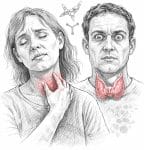
The thyroid gland, a butterfly-shaped endocrine organ situated at the base of the neck and weighing approximately twenty-five grams in healthy adults, occupies a uniquely critical position in human physiology as the primary producer of the thyroid hormones thyroxine and triiodothyronine whose influence extends to virtually every cell and organ system in the body. The thyroid hormones regulate the basal metabolic rate, cardiovascular function, neurological development and cognition, reproductive health, bone metabolism, gastrointestinal motility, and the function of every major organ system through their interaction with nuclear thyroid hormone receptors that directly control the transcription of hundreds of target genes in virtually all nucleated cells. Given this extraordinary breadth of thyroid hormone influence, the diseases that disrupt thyroid function produce correspondingly widespread clinical manifestations whose diversity can challenge even experienced clinicians. Among the multiple causes of thyroid dysfunction, the autoimmune thyroid diseases stand as the most prevalent, collectively affecting approximately ten percent of the general adult population and producing the opposite functional extremes of thyroid hormone deficiency in Hashimoto thyroiditis and thyroid hormone excess in Graves disease through fundamentally distinct immunological mechanisms that converge on a common target, the thyroid follicular cell.
The autoimmune thyroid diseases represent the most common organ-specific autoimmune conditions in human medicine, affecting women at rates five to ten times higher than men and illustrating the profound influence of the female immune system’s regulatory characteristics on susceptibility to autoimmune disease. This sex disparity, consistent across different populations, geographic regions, and time periods, reflects the complex effects of female sex hormones on the immune regulatory mechanisms that normally maintain self-tolerance, with estrogen promoting the type of immune response that predisposes to autoimmune attack while simultaneously providing certain protective effects that prevent the most severe manifestations of immune dysregulation. The mechanisms underlying the female predisposition to autoimmune thyroid disease remain incompletely characterized but involve the estrogen-mediated promotion of Th2 lymphocyte responses that favor antibody production, the X-chromosome-linked immune regulatory genes whose haploinsufficiency in females due to skewed X-inactivation can impair central and peripheral tolerance mechanisms, and the pregnancy-related immune tolerance changes that protect the fetus from maternal immune rejection but whose resolution in the postpartum period can precipitate autoimmune thyroid disease in genetically susceptible women.
The increasing prevalence of autoimmune thyroid diseases over the past several decades in developed countries, beyond what can be explained by improved diagnostic detection, has generated research interest in the environmental triggers that may be promoting immune dysregulation in genetically susceptible populations. Proposed environmental contributors to the rising autoimmune thyroid disease burden include the increasing dietary iodine intake from fortification programs and iodine-containing food additives, the expanding use of iodine-containing medications and radiological contrast agents, the proliferation of environmental pollutants including polychlorinated biphenyls and bisphenol A that disrupt thyroid hormone signaling and immune regulation, the changes in the intestinal microbiome produced by antibiotic use and dietary shifts that alter the gut-immune axis regulation of systemic immune tolerance, and the increasing psychological stress burden of modern life whose hormonal and neurochemical effects influence immune regulation in ways that may promote autoimmune thyroid disease development in predisposed individuals.
Hashimoto Thyroiditis: Pathogenesis and Clinical Course
Hashimoto thyroiditis, first described by the Japanese physician Hakaru Hashimoto in 1912 as a form of struma lymphomatosa characterized by diffuse lymphocytic infiltration and fibrosis of the thyroid gland, is the most common cause of hypothyroidism in iodine-sufficient regions of the world and the most prevalent autoimmune disease affecting any single organ. The pathological hallmarks of Hashimoto thyroiditis, including the dense lymphocytic and plasma cell infiltration of thyroid parenchyma, the formation of germinal centers within the thyroid with active B lymphocyte clonal expansion, the oncocytic transformation of thyroid follicular cells into the Hurthle cells or oxyphilic cells characteristic of established disease, and the progressive fibrosis replacing destroyed follicular tissue, collectively represent the structural consequences of a sustained, organ-directed autoimmune attack whose cellular and molecular mechanisms have been progressively elucidated over the past four decades of thyroid immunology research.
The immunological mechanisms driving the autoimmune destruction of Hashimoto thyroiditis involve both cellular and humoral immune components acting in concert to target thyroid follicular cells through complementary pathways. Autoreactive CD4-positive helper T lymphocytes recognizing thyroid-specific antigens including thyroid peroxidase, thyroglobulin, and the sodium iodide symporter in the context of the major histocompatibility complex class II molecules expressed on thyroid cells and antigen-presenting cells provide the cognate help required for autoreactive B lymphocytes to mature into the plasma cells that produce the thyroid peroxidase and thyroglobulin autoantibodies that are the serological hallmarks of Hashimoto thyroiditis. Autoreactive CD8-positive cytotoxic T lymphocytes, activated by the aberrant major histocompatibility complex class I-restricted presentation of thyroid-specific antigens on thyroid follicular cells whose MHC class I expression is upregulated by the interferon gamma produced in the inflammatory microenvironment, directly kill thyroid cells through perforin-granzyme-mediated cytotoxicity that produces the apoptotic follicular cell death contributing to progressive thyroid tissue destruction alongside the complement-mediated and antibody-dependent cellular cytotoxicity mechanisms driven by the humoral immune response.
The thyroid peroxidase antibodies detected in greater than ninety percent of Hashimoto thyroiditis patients serve as both the most sensitive diagnostic marker of the condition and as direct mediators of thyroid damage through their complement-fixing and antibody-dependent cellular cytotoxicity activities at the follicular cell surface where thyroid peroxidase is expressed. The thyroglobulin antibodies present in sixty to seventy percent of Hashimoto patients are similarly diagnostic and potentially pathogenic, with their titers correlating with disease activity and the degree of thyroid inflammation in many studies. The clinical utility of measuring thyroid autoantibodies in the evaluation of thyroid dysfunction extends beyond establishing the autoimmune etiology to predicting the rate of progression from subclinical to overt hypothyroidism, identifying the cause of goiter in patients with normal thyroid function, and stratifying the risk of developing thyroid dysfunction in first-degree relatives of patients with Hashimoto thyroiditis.
The clinical course of Hashimoto thyroiditis reflects the progressive destruction of thyroid follicular tissue by the sustained autoimmune attack, which over years to decades reduces thyroid functional reserve until the remaining thyroid cells can no longer compensate for the loss of functional tissue and thyroid hormone production falls below the threshold required for normal function. Many patients remain euthyroid for prolonged periods as the hypothalamic-pituitary-thyroid axis compensates for reduced thyroid functional capacity through progressive elevation of thyroid-stimulating hormone that drives the surviving follicular cells to maximal synthetic activity, and this compensatory phase of subclinical hypothyroidism with elevated thyroid-stimulating hormone but normal free thyroxine may persist for years before decompensating to overt hypothyroidism. The hashitoxicosis that occurs in a minority of Hashimoto patients early in the disease course, when the inflammatory destruction of thyroid follicles releases preformed thyroid hormone into the circulation and produces a transient hyperthyroid state lasting weeks to months before the hypothyroid trajectory reasserts itself, represents a clinically confusing presentation that can be misdiagnosed as Graves disease without the careful evaluation of thyroid antibody profiles and ultrasonographic findings that distinguish the two conditions.
Graves Disease: Mechanisms of Thyroid Stimulating Immunoglobulins
Graves disease, the most common cause of hyperthyroidism in iodine-sufficient populations and affecting approximately one percent of the general population with a female to male ratio of approximately eight to one, exemplifies the pathological consequences of stimulatory autoimmunity rather than the destructive autoimmunity of Hashimoto thyroiditis, with the production of thyroid-stimulating immunoglobulins that bind and activate the thyroid-stimulating hormone receptor on thyroid follicular cells in a sustained and unregulated manner producing the uncontrolled thyroid hormone synthesis that generates the clinical syndrome of thyrotoxicosis. The thyroid-stimulating hormone receptor, a G protein-coupled receptor of the leucine-rich repeat family that is normally activated by the pituitary thyroid-stimulating hormone whose pulsatile secretion provides the physiologically regulated drive for thyroid hormone synthesis, becomes constitutively and inappropriately activated by the Graves disease autoantibodies that bind its ectodomain and mimic the receptor activation of thyroid-stimulating hormone without being subject to the normal feedback suppression that controls thyroid-stimulating hormone secretion.
The immunological basis of thyroid-stimulating immunoglobulin production in Graves disease involves the loss of self-tolerance to the thyroid-stimulating hormone receptor in a population of CD4-positive helper T lymphocytes that provide help to the B lymphocyte clones producing the receptor-activating autoantibodies. The specific breakdown of self-tolerance to the thyroid-stimulating hormone receptor in genetically susceptible individuals has been attributed to molecular mimicry between thyroid-stimulating hormone receptor epitopes and antigens of infectious microorganisms, to aberrant major histocompatibility complex class II-restricted presentation of thyroid-stimulating hormone receptor peptides by thyroid follicular cells under conditions of inflammatory cytokine exposure that upregulates their antigen-presenting cell function, and to the defective function of regulatory T lymphocytes that normally suppress autoreactive T cell clones but are reduced in number and functional impairment in Graves disease patients compared to healthy controls. The specific HLA haplotype associations of Graves disease, particularly with HLA-DR3 and HLA-DQA1 alleles in Caucasian populations, reflect the major histocompatibility complex class II-dependent nature of the autoreactive T cell help driving thyroid-stimulating immunoglobulin production and the role of specific peptide-presenting HLA molecules in determining which thyroid-stimulating hormone receptor epitopes are most efficiently presented to autoreactive T cells.
Graves Ophthalmopathy and Thyroid Dermopathy
Graves ophthalmopathy, the extrathyroidal autoimmune manifestation of Graves disease affecting the orbital contents through inflammatory infiltration and glycosaminoglycan deposition driven by the shared expression of thyroid-stimulating hormone receptor on orbital fibroblasts, represents the most clinically significant and most therapeutically challenging complication of Graves disease, producing the periorbital edema, proptosis, impaired extraocular motility, exposure keratopathy, and in the most severe cases compressive optic neuropathy that threaten vision and profoundly impair quality of life. The pathophysiology of Graves ophthalmopathy involves the activation of orbital fibroblast populations that express both the thyroid-stimulating hormone receptor and the insulin-like growth factor 1 receptor by thyroid-stimulating immunoglobulins and anti-IGF-1R antibodies, stimulating the fibroblast production of glycosaminoglycans including hyaluronic acid that accumulate in the orbital fat and extraocular muscles and produce the characteristic orbital volume expansion and muscle enlargement that drive proptosis and restrictive strabismus.
The clinical assessment of Graves ophthalmopathy using the Clinical Activity Score, which quantifies the degree of active inflammation by scoring the presence and severity of pain, redness, swelling, and functional impairment, guides the treatment approach by distinguishing the active inflammatory phase during which immunosuppressive treatment is most likely to produce benefit from the inactive fibrotic phase in which orbital decompression surgery is more appropriate for addressing the residual proptosis and functional impairment that persist after inflammation has resolved. The recently approved teprotumumab, a monoclonal antibody targeting the insulin-like growth factor 1 receptor that blocks the fibroblast activation pathway driving glycosaminoglycan accumulation in Graves ophthalmopathy, has demonstrated dramatic reductions in proptosis, clinical activity score, and diplopia in randomized clinical trials, representing the first disease-specific pharmacological treatment for Graves ophthalmopathy and establishing the insulin-like growth factor 1 receptor as a validated therapeutic target in this previously difficult-to-treat condition.
The management of Graves hyperthyroidism offers three therapeutic approaches that achieve thyroid hormone normalization through fundamentally different mechanisms: antithyroid drugs including methimazole and propylthiouracil that block thyroid hormone synthesis by inhibiting thyroid peroxidase activity, radioactive iodine therapy with iodine-131 that produces selective thyroid cell destruction through the beta radiation emitted by radioiodine concentrated in thyroid follicular cells, and thyroidectomy that surgically removes the thyroid gland. The choice among these approaches must account for the severity of hyperthyroidism, the presence and severity of ophthalmopathy, the patient’s pregnancy status and plans, the presence of thyroid nodules requiring evaluation, and the patient’s preferences regarding the definitive versus medical management of their condition, with radioactive iodine being relatively contraindicated in active Graves ophthalmopathy due to evidence of ophthalmopathy worsening following radioiodine treatment that is not observed with thyroidectomy.