
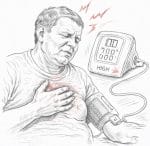
Hypertension, or persistently elevated blood pressure, is the most prevalent modifiable cardiovascular risk factor in the world and the single largest contributor to global cardiovascular mortality, responsible for approximately half of all cardiovascular deaths and playing a causal role in coronary artery disease, heart failure, stroke, chronic kidney disease, and aortic aneurysm at a scale that makes it arguably the most important chronic disease challenge in global health. The World Health Organization estimates that approximately 1.28 billion adults worldwide have hypertension as defined by blood pressure readings of 130 over 80 millimeters of mercury or higher under contemporary guidelines, with more than half of those affected remaining undiagnosed and the majority of those diagnosed achieving inadequate blood pressure control on their current treatment. This triple failure of detection, diagnosis, and treatment control creates an enormous preventable burden of premature cardiovascular disease and death that represents one of the greatest opportunities for improving population health through systematic improvements in blood pressure screening, treatment initiation, and adherence support.
The relationship between blood pressure and cardiovascular risk is continuous, graded, and extends well below the traditional diagnostic thresholds that have historically defined hypertension. The landmark meta-analysis by the Prospective Studies Collaboration, pooling data from one million adults across sixty-one prospective studies, demonstrated that each twenty millimeter of mercury higher systolic blood pressure above the level of 115 over 75 millimeters of mercury is associated with approximately doubling of cardiovascular mortality risk from stroke and ischemic heart disease, with no threshold below which further blood pressure reduction fails to produce cardiovascular benefit. This continuous dose-response relationship, extending into blood pressure ranges previously considered normal, has supported progressive lowering of the diagnostic and treatment thresholds for hypertension in successive guideline revisions and has provided the epidemiological justification for the more intensive blood pressure targets adopted in recent guidelines for high-risk individuals.
The mechanisms through which elevated blood pressure damages the cardiovascular system and accelerates the development of heart disease are multiple and operate simultaneously across several anatomical compartments and physiological systems. The mechanical stress of elevated intravascular pressure directly injures endothelial cells, impairs nitric oxide production, promotes the oxidative modification of low-density lipoprotein in the arterial wall, and accelerates atherosclerotic plaque development in the coronary and other major arteries. The chronic afterload imposed on the left ventricle by systemic hypertension drives adaptive myocardial hypertrophy that initially preserves cardiac function but progressively transitions to maladaptive hypertrophy with interstitial fibrosis, diastolic dysfunction, and ultimately systolic failure. These mechanistic pathways through which hypertension damages the heart both independently and synergistically with atherosclerosis explain why effective blood pressure control produces cardiovascular benefits that extend beyond coronary artery disease prevention to encompass heart failure prevention, stroke reduction, and renal protection.
Pathological Effects of Elevated Blood Pressure on the Heart
The heart bears a disproportionate burden of the organ damage produced by chronic hypertension, experiencing the consequences of systemic hypertension as both a direct mechanical victim of elevated afterload and as a secondary victim of the accelerated coronary atherosclerosis and microvascular disease that hypertension promotes in the vessels supplying the myocardium. Left ventricular hypertrophy, the most clinically significant cardiac consequence of hypertension and an independent predictor of cardiovascular events and mortality, develops as the adaptive response of the myocardium to the chronically increased wall stress imposed by elevated systolic blood pressure, with the Laplace relationship dictating that elevated wall tension drives concentric hypertrophy through increased sarcomere replication in parallel that thickens the ventricular wall and reduces wall stress at the cost of increased myocardial mass.
The molecular signaling pathways driving hypertension-induced myocardial hypertrophy involve the activation of multiple pro-hypertrophic transcription factors and kinases by the mechanical stretch stimuli sensed by myocardial integrins and stretch-activated ion channels, the local autocrine and paracrine effects of angiotensin II, endothelin-1, and catecholamines that are upregulated in hypertensive hearts, and the downstream activation of calcineurin-NFAT and MAPK signaling cascades that alter the pattern of gene expression in cardiomyocytes from the adult to the fetal isoform pattern that characterizes pathological hypertrophy. The transition from compensated hypertrophy, in which increased wall thickness normalizes wall stress and preserves systolic function, to decompensated hypertrophy with interstitial fibrosis, cardiomyocyte apoptosis, and progressive systolic dysfunction reflects the eventual exhaustion of the compensatory mechanisms and the accumulating molecular damage from sustained neurohormonal activation and oxidative stress.
Diastolic dysfunction, impaired relaxation and filling of the left ventricle during diastole, is the earliest and most common cardiac functional abnormality in hypertension, preceding the development of systolic dysfunction by years to decades in most patients. The stiff, hypertrophied left ventricle of hypertensive heart disease fills poorly during diastole, requiring elevated left atrial pressures to achieve adequate end-diastolic volume, which in turn produces the pulmonary venous congestion and dyspnea on exertion that are the clinical hallmarks of heart failure with preserved ejection fraction. This form of heart failure, in which the heart fails to meet the body’s demands despite a normal ejection fraction due to impaired diastolic filling, is predominantly a disease of hypertensive older adults and is the most common form of heart failure in women, reflecting the particular vulnerability of the female myocardium to fibrotic remodeling in response to pressure overload. The management of heart failure with preserved ejection fraction, which lacks the evidence-based pharmacological therapies that have transformed outcomes in heart failure with reduced ejection fraction, remains one of the greatest unmet needs in cardiovascular medicine and one in which better blood pressure control from earlier in life represents the most effective preventive strategy currently available.
Coronary microvascular disease, affecting the small intramyocardial arterioles and capillaries that constitute the coronary microvasculature responsible for regulating myocardial blood flow in response to metabolic demand, is a major consequence of chronic hypertension that contributes to symptoms, functional impairment, and adverse outcomes independently of epicardial coronary artery disease. Hypertension promotes coronary microvascular dysfunction through the structural remodeling of small arterioles that reduces their lumen to wall ratio, the endothelial dysfunction that impairs vasodilation in response to increased myocardial oxygen demand, the perivascular fibrosis that reduces microvascular compliance, and the rarefaction of microvascular density that reduces the total cross-sectional area available for myocardial blood delivery. The resulting impairment of coronary flow reserve produces the exertional angina, exercise intolerance, and in severe cases resting ischemia that can be clinically indistinguishable from epicardial coronary artery disease but that does not respond to coronary revascularization procedures targeting the large coronary arteries.
Blood Pressure Control and Cardiovascular Outcomes
The evidence base for blood pressure lowering as a cardiovascular risk reduction strategy is among the most extensive and consistently positive in all of preventive medicine, with multiple large randomized controlled trials and their meta-analyses demonstrating significant reductions in stroke, myocardial infarction, heart failure, and cardiovascular death with effective antihypertensive treatment across a wide range of patient populations and blood pressure levels. The Systolic Blood Pressure Intervention Trial, which randomized more than nine thousand high-risk adults with hypertension to intensive blood pressure targets of less than 120 millimeters of mercury systolic versus standard targets of less than 140 millimeters of mercury, demonstrated that intensive control produced a twenty-five percent reduction in the primary composite cardiovascular outcome and a twenty-seven percent reduction in all-cause mortality, providing compelling evidence for the superiority of more intensive blood pressure targets in high-risk individuals and reshaping guideline recommendations globally.
The five major classes of antihypertensive medications, encompassing angiotensin-converting enzyme inhibitors, angiotensin receptor blockers, calcium channel blockers, thiazide and thiazide-like diuretics, and beta-blockers, each reduce blood pressure through distinct physiological mechanisms that provide complementary pathways for achieving blood pressure targets when used in combination. Angiotensin-converting enzyme inhibitors and angiotensin receptor blockers block the renin-angiotensin-aldosterone system at different levels, reducing the vasoconstriction, sodium retention, and cardiac remodeling driven by angiotensin II, and providing organ-protective benefits in the kidney and heart that extend beyond their blood pressure-lowering effects. Calcium channel blockers reduce peripheral vascular resistance by blocking voltage-dependent calcium channels in arterial smooth muscle, producing vasodilation without the sodium retention that can attenuate the blood pressure-lowering effect of other antihypertensive agents. The selection among and combination of these agents must be individualized based on comorbidities, tolerability, cost, and the presence of compelling indications for specific drug classes, with most hypertensive patients requiring two or more agents to achieve guideline-recommended blood pressure targets.
Lifestyle Modification and Prevention
Lifestyle modification constitutes both the first-line treatment for newly diagnosed hypertension and an essential adjunct to pharmacological therapy at all stages of hypertension management, with evidence demonstrating that the combination of multiple lifestyle interventions can reduce systolic blood pressure by ten to twenty millimeters of mercury in susceptible individuals, an effect comparable in magnitude to the monotherapy effect of a single antihypertensive medication class. The Dietary Approaches to Stop Hypertension eating pattern, which emphasizes fruits, vegetables, whole grains, low-fat dairy products, and reduced saturated fat and sodium intake, reduces systolic blood pressure by approximately eleven millimeters of mercury in hypertensive individuals when followed consistently, making it one of the most potent single lifestyle interventions for blood pressure reduction.
Dietary sodium restriction, targeting intake below two grams per day in hypertensive patients, produces blood pressure reductions of approximately five to seven millimeters of mercury in sodium-sensitive individuals and has the additional benefit of amplifying the blood pressure-lowering effects of all antihypertensive medication classes, making sodium restriction a universally applicable and medication-complementary lifestyle recommendation for hypertensive patients. The sodium sensitivity of blood pressure, which varies substantially between individuals based on genetic factors including variants in the epithelial sodium channel and the renin-angiotensin-aldosterone system regulatory genes, explains why some patients show dramatic blood pressure responses to dietary sodium restriction while others show minimal responsiveness, supporting the use of a dietary sodium reduction trial to identify sodium-sensitive individuals who will benefit most from this intervention.
Regular aerobic physical activity reduces blood pressure through multiple mechanisms including reduced peripheral vascular resistance from exercise-induced adaptations in vascular structure and endothelial function, reduction of sympathetic nervous system tone from training-induced adaptations in cardiac autonomic regulation, improvements in insulin sensitivity that reduce the hyperinsulinemia-driven sodium retention associated with metabolic syndrome, and weight reduction in overweight and obese individuals that removes the blood pressure-elevating effects of excess adiposity. Meta-analyses of exercise training trials in hypertensive individuals consistently document reductions in systolic blood pressure of four to eight millimeters of mercury with regular moderate-intensity aerobic exercise, with the blood pressure-lowering effects being additive to those of antihypertensive medications and sustainable as long as the exercise regimen is maintained. The comprehensive integration of dietary modification, sodium restriction, regular aerobic exercise, alcohol moderation, and smoking cessation within a hypertension management plan provides the greatest achievable non-pharmacological blood pressure reduction and supports the optimization of cardiovascular risk reduction beyond blood pressure lowering alone.