
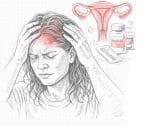
The dramatic sex difference in migraine prevalence, with women being approximately three times more likely than men to suffer from migraine across the productive adult years, is one of the most striking epidemiological features of the condition and points unequivocally to the central role that female sex hormones play in modulating migraine susceptibility, attack frequency, and severity across the female reproductive lifespan. Before puberty, migraine prevalence is roughly equal between boys and girls, and if anything slightly higher in boys, reflecting the genetic and constitutional factors that determine migraine susceptibility independent of sex hormone influences. The divergence between male and female migraine prevalence that emerges at puberty, as the hormonal changes of the menstrual cycle begin to exert their modulating influence on cortical excitability and trigeminovascular activation thresholds, establishes the female sex hormones as the most important environmental modifiers of migraine expression identified in clinical and epidemiological research.
The relationship between hormonal changes and migraine is bidirectional and temporally specific, with migraine attacks showing strong associations with the times of maximum hormonal change rather than with any particular absolute hormone level. The precipitous fall in estrogen that occurs in the days immediately before menstruation is the most important and best-characterized hormonal migraine trigger, with menstrually associated migraine affecting approximately fifty to sixty percent of women with migraine and pure menstrual migraine, in which attacks occur exclusively in the perimenstrual window, affecting approximately ten to fifteen percent. The hormonal changes of pregnancy, with the first trimester estrogen rise producing paradoxical migraine worsening in some women and the sustained high estrogen plateau of the second and third trimesters producing the remarkable migraine improvement that approximately seventy percent of pregnant migraineurs experience, the postpartum estrogen withdrawal triggering a frequently severe migraine recurrence in the days after delivery, and the hormonal fluctuations of the perimenopause producing the migraine worsening that many women experience in the years preceding the menopause, together illustrate the profound and dynamic influence of the female reproductive endocrine system on migraine biology throughout the lifespan.
Understanding the mechanisms through which estrogen and progesterone modulate migraine susceptibility, and the clinical implications of this hormonal modulation for the management of migraine across the female reproductive lifespan including the considerations specific to hormonal contraception, hormone replacement therapy, and the transition through menopause, is an essential competency for the neurologist, gynecologist, and primary care physician who cares for women with migraine. The intersection of migraine with hormonal contraception is particularly clinically important given the additional stroke risk consideration that is relevant for women who have migraine with aura, establishing specific contraindications that require careful attention to migraine diagnosis in women being considered for combined estrogen-containing hormonal contraception.
Estrogen and Cortical Excitability Mechanisms
Estrogen exerts profound modulatory effects on neuronal excitability, synaptic transmission, and the threshold for cortical spreading depression through its interactions with estrogen receptors distributed throughout the cerebral cortex, limbic system, hypothalamus, and brainstem structures involved in pain modulation and autonomic regulation. The nuclear estrogen receptors alpha and beta, expressed in neurons and glial cells throughout the brain, mediate the genomic effects of estrogen through the regulation of gene transcription, altering the expression of ion channels, neurotransmitter receptors, neuropeptides, and signaling molecules in ways that modify neuronal excitability over hours to days. The membrane-associated estrogen receptors and the estrogen binding sites on glutamate receptors mediate the rapid non-genomic effects of estrogen that can alter neuronal excitability within minutes of hormone binding, providing a mechanism for the acute neurophysiological responses to estrogen level changes that may contribute to the relatively rapid emergence of hormonally triggered migraine attacks within hours of the perimenstrual estrogen fall.
The effects of estrogen on glutamatergic excitatory neurotransmission are particularly relevant to migraine pathophysiology given the central role of excessive glutamate receptor activation in initiating and propagating cortical spreading depression. Estrogen enhances the expression of glutamate receptors including the NMDA and AMPA receptor subunits in hippocampal and cortical neurons, increases the density of dendritic spines that are the primary postsynaptic sites of glutamatergic synaptic transmission, and promotes synaptic potentiation through mechanisms that increase the responsiveness of cortical circuits to excitatory stimulation. When estrogen levels are high during the follicular and luteal phases of the menstrual cycle, these glutamate-potentiating effects may increase cortical excitability toward the threshold for cortical spreading depression without reaching it in most women because other inhibitory mechanisms are simultaneously active. When estrogen falls precipitously in the perimenstrual period, the withdrawal of estrogen-mediated inhibitory effects on certain neuronal populations, particularly the GABAergic interneurons that are upregulated by estrogen, may unmask the hyperexcitable cortical state that triggers cortical spreading depression and migraine attack.
The trigeminal pain system, which generates migraine headache pain through the activation of sensory neurons whose peripheral terminals innervate the meningeal blood vessels and whose central projections synapse on pain-modulating neurons in the trigeminal nucleus caudalis, is directly modulated by estrogen at multiple levels. Trigeminal ganglion neurons express estrogen receptors and respond to estrogen by altering the expression of calcitonin gene-related peptide, substance P, and other neuropeptides involved in trigeminovascular activation and neurogenic inflammation. Estrogen modulates the sensitivity of the trigeminal nucleus caudalis to incoming nociceptive stimuli from the meningeal vasculature, with high estrogen associated with enhanced descending pain inhibition and perimenstrual estrogen withdrawal producing impaired descending inhibitory control that amplifies the central processing of meningeal nociceptive signals. The sensitization of dural mast cells by perimenstrual prostaglandin release, itself promoted by the progesterone withdrawal that accompanies the perimenstrual hormonal changes, provides an additional peripheral mechanism through which hormonal changes promote dural neurogenic inflammation and trigeminovascular activation in the perimenstrual window.
Menstrual Migraine: Clinical Features and Management
Menstrual migraine and menstrually associated migraine represent distinct clinical entities whose characterization requires prospective headache diary documentation of the temporal relationship between migraine attacks and the menstrual cycle across at least three consecutive cycles, because retrospective patient estimates of this relationship are frequently inaccurate due to the recall bias and cycle-to-cycle variability that complicate clinical assessment. Pure menstrual migraine, defined by the International Headache Society as attacks occurring exclusively between two days before and three days after the onset of menstruation in the majority of cycles with no attacks at other times, affects a minority of women with menstrual migraine and represents a relatively straightforward clinical picture in which the hormonal trigger is clearly dominant and in which the treatment approach focuses specifically on this perimenstrual window. Menstrually associated migraine, in which attacks occur perimenstrually in the majority of cycles but also at other times, is substantially more common and requires a more comprehensive treatment approach that addresses both the menstrually associated attacks through perimenstrual prophylaxis and the non-menstrual attacks through standard acute treatment and consideration of continuous daily prophylaxis when attack burden is high.
The acute treatment of menstrual migraine attacks follows the same evidence-based principles as the treatment of other migraine attacks, with the triptans representing the most effective abortive class when initiated early in the attack, and with the recognition that menstrual migraine attacks are often more severe, longer lasting, and more refractory to acute treatment than attacks at other times of the menstrual cycle. The greater severity and duration of perimenstrual attacks may reflect the additional contribution of the prostaglandin-driven uterine pain and the inflammatory state of menstruation to the central sensitization that amplifies and prolongs migraine pain, and suggests that the concurrent use of non-steroidal anti-inflammatory drugs with triptan therapy may provide synergistic benefit for menstrual migraine attacks through their suppression of the prostaglandin-mediated peripheral sensitization that contributes to attack severity.
Short-term perimenstrual prophylaxis, in which a preventive medication is taken specifically in the perimenstrual window rather than continuously throughout the month, provides an attractive approach for women with predictable menstrual cycles in whom the perimenstrual attacks represent the primary migraine burden and in whom continuous daily prophylaxis seems disproportionate to the pattern of attack clustering. Frovatriptan, a long-acting triptan with a half-life of approximately twenty-six hours, has the strongest evidence base for perimenstrual prophylaxis from randomized controlled trials demonstrating significant reductions in perimenstrual attack frequency when taken twice daily for the six days surrounding menstruation compared to placebo. Non-steroidal anti-inflammatory drugs including naproxen sodium taken twice daily during the perimenstrual window provide an alternative or adjunct to frovatriptan prophylaxis, suppressing the prostaglandin-mediated peripheral sensitization that contributes to perimenstrual attack generation and severity. Transdermal estrogen patches applied during the five days preceding menstruation and maintained through the first three days of menstruation attenuate the magnitude of the perimenstrual estrogen withdrawal that triggers menstrual migraine, providing a hormonal manipulation approach to perimenstrual prophylaxis that is effective in appropriately selected women.
Hormonal Contraception and Hormone Replacement Therapy
The interaction between hormonal contraception and migraine represents one of the most clinically consequential areas of intersection between gynecological and neurological medicine, because the choice of contraceptive method must account for both the effect of the contraceptive on migraine frequency and severity and the stroke risk consideration that is specific to women with migraine with aura. Combined oral contraceptives containing both estrogen and progestogen can worsen migraine in some women, improve it in others, and have no effect in still others, reflecting the heterogeneity in the hormonal sensitivity of migraine among individual women and the complex effects of exogenous estrogen and progestogen on the neurobiological mechanisms underlying migraine attacks. The pill-free interval of combined oral contraceptives, during which the withdrawal of exogenous estrogen produces a hormonal withdrawal migraine similar to natural menstrual migraine, is a particularly common source of migraine worsening that can be addressed through tailored prescribing approaches that minimize the duration or eliminate the pill-free interval.
The most critical clinical consideration in the use of hormonal contraception for women with migraine is the significantly elevated stroke risk associated with the combination of migraine with aura and combined estrogen-containing hormonal contraception, which produces a multiplicative rather than merely additive increase in ischemic stroke risk when both risk factors are present simultaneously. Migraine with aura independently doubles ischemic stroke risk compared to women without migraine, while combined oral contraceptive use independently produces a two to four fold increase in ischemic stroke risk through its prothrombotic effects, and the combination of both factors produces a four to eight fold elevated ischemic stroke risk compared to women with neither factor. This multiplicative interaction has led to the categorical recommendation in multiple national and international guidelines that combined estrogen-containing hormonal contraception is contraindicated in women with migraine with aura, regardless of other cardiovascular risk factors, with progestogen-only methods including the progestogen-only pill, implant, and hormonal intrauterine system recommended as safe and effective alternatives that do not share the stroke risk of combined methods.
The management of migraine through the menopausal transition and into postmenopause requires individualized assessment of the hormonal contributions to migraine activity and the effect of menopausal hormone therapy on migraine patterns. The perimenopause, characterized by irregular and increasingly infrequent menstrual cycles with erratic estrogen levels that fluctuate more widely than in the regular reproductive years, frequently worsens migraine due to the unpredictable estrogen fluctuations that cannot be anticipated with perimenstrual prophylaxis strategies, producing an increase in attack frequency that can be profoundly disabling in the years preceding the natural menopause. Menopausal hormone therapy with transdermal rather than oral estrogen delivery, which maintains more stable plasma estrogen concentrations without the first-pass hepatic metabolism that promotes prothrombotic coagulation factor changes, reduces the estrogen fluctuations that trigger migraine and may improve migraine patterns in perimenopausal women, though the response varies substantially between individuals and requires trial and careful monitoring of migraine diary outcomes to assess whether hormone therapy is beneficial or detrimental for the individual patient.