
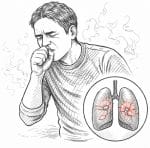
Lung cancer occupies a singular position in the landscape of human malignancy, carrying the heaviest mortality burden of any cancer type while simultaneously being the subject of some of the most dramatic therapeutic advances in oncology history. Approximately 1.8 million people die of lung cancer each year worldwide, a toll that exceeds the combined mortality from breast, colorectal, and prostate cancer and that reflects the historically grim prognosis of a disease in which most patients present with advanced, incurable disease by the time symptoms compel them to seek medical attention. The fundamental epidemiological reality underlying this mortality burden is that lung cancer is predominantly a preventable disease, caused in the great majority of cases by tobacco smoking whose causal role is as thoroughly established in the scientific literature as any etiological relationship in medicine, making the persistence of high lung cancer mortality a preventable public health tragedy of the first order.
The past two decades have witnessed transformative advances in the biological understanding and therapeutic management of lung cancer that have produced meaningful survival improvements for the minority of patients whose tumors harbor actionable molecular alterations and for those whose tumors respond to immune checkpoint inhibition. The systematic genomic characterization of lung adenocarcinoma through large-scale molecular profiling efforts identified a series of oncogenic driver alterations that rendered specific tumor populations exquisitely sensitive to molecularly targeted therapies, producing response rates and survival durations that far exceeded what was achievable with conventional cytotoxic chemotherapy and initiating the precision medicine era in thoracic oncology. Simultaneously, the demonstration that immune checkpoint inhibitors targeting the programmed death-1 pathway could produce durable responses including occasional complete remissions in a subset of previously treated and untreated advanced non-small cell lung cancer patients established immunotherapy as a new pillar of treatment that has fundamentally altered the therapeutic landscape.
Despite these advances, the overall prognosis for lung cancer patients remains poor, with five-year survival rates for all-stage disease remaining below twenty-five percent in most countries. The persistent gap between the dramatic benefits observed in selected patient populations with specific molecular features and the modest benefits achievable for the broader population of unselected lung cancer patients reflects both the biological heterogeneity of the disease and the reality that the majority of patients continue to present with advanced disease that is beyond curative treatment. The implementation and expansion of low-dose computed tomography screening programs for high-risk individuals represents the most important currently available strategy for improving overall lung cancer outcomes by detecting tumors at earlier, more curable stages, and the extension of these programs to broader at-risk populations in a cost-effective and equitable manner is a public health priority of the highest importance.
Biological Subtypes and Molecular Landscape
The pathological and molecular classification of lung cancer provides the foundation for treatment decision-making and prognostic estimation, and has evolved from a binary distinction between small cell and non-small cell histology to an increasingly granular characterization that encompasses histological subtype, molecular driver alteration, immune biomarker expression, and increasingly complex multidimensional molecular profiling. This evolution in classification reflects the clinical importance of each additional layer of tumor characterization in guiding treatment selection and predicting treatment response.
Lung adenocarcinoma, which arises from peripheral alveolar epithelial cells and is now the most common histological subtype in most countries, is characterized by the highest proportion of tumors harboring targetable oncogenic driver alterations among the major lung cancer histological types. The oncogenic driver alteration landscape of lung adenocarcinoma is dominated by mutations in the KRAS oncogene, present in approximately thirty percent of adenocarcinomas and historically considered undruggable before the development of selective KRAS G12C inhibitors including sotorasib and adagrasib that have produced meaningful clinical responses in this previously untreatable molecular subgroup. EGFR mutations, present in approximately fifteen percent of adenocarcinomas in Western populations, represent the most therapeutically validated driver alteration in lung cancer with multiple generations of targeted inhibitors providing sequential treatment options. The oncogenic rearrangements involving ALK, ROS1, RET, NTRK, and NRG1 genes, though each individually present in only two to five percent of adenocarcinomas, are collectively important because they define populations with exceptional sensitivity to specific targeted therapies and because identifying them requires comprehensive molecular testing that must be performed routinely in all newly diagnosed advanced adenocarcinoma patients.
Squamous cell carcinoma of the lung is strongly associated with tobacco smoking, arises from the central airways, and is characterized by fewer targetable oncogenic driver alterations than adenocarcinoma, making molecular targeted therapy less relevant and immunotherapy a more important therapeutic modality. The mutational burden of squamous cell carcinoma is high compared to adenocarcinoma, reflecting the extensive mutagenic damage from tobacco carcinogens, which is associated with higher rates of response to immune checkpoint inhibitors through the generation of immunogenic neoantigens that enhance tumor immunogenicity. FGFR1 amplification, present in approximately twenty percent of squamous cell lung cancers, has been explored as a therapeutic target without yet producing the clinical success seen with EGFR and ALK targeting in adenocarcinoma.
Small cell lung cancer, a neuroendocrine malignancy of extraordinarily aggressive biology, is almost exclusively associated with heavy tobacco smoking, arises from pulmonary neuroendocrine cells, and is characterized by rapid growth, early systemic dissemination, and near-universal initial sensitivity to platinum-based chemotherapy followed by equally near-universal development of drug resistance and disease relapse. The five-year survival rate for limited-stage small cell lung cancer treated with concurrent chemoradiotherapy is approximately twenty to thirty percent, while for extensive-stage disease it is below ten percent, reflecting the fundamentally systemic nature of small cell lung cancer at diagnosis and the inadequacy of current treatments to produce durable disease control. The addition of immune checkpoint inhibitors to platinum-etoposide chemotherapy has produced modest survival improvements in extensive-stage disease, the first meaningful therapeutic advance in small cell lung cancer in decades, though the magnitude of benefit remains limited compared to what has been achieved with immunotherapy in non-small cell lung cancer.
Screening and Early Detection
The clinical significance of stage at diagnosis for lung cancer outcomes is demonstrated most starkly by the comparison of five-year survival rates between early and advanced disease: patients with stage I lung cancer detected as small peripheral tumors have five-year survival rates approaching ninety percent following surgical resection, while patients with stage IV metastatic disease have five-year survival rates below ten percent even with the most effective currently available systemic therapies. This enormous prognostic gradient creates a compelling rationale for screening interventions that can shift the stage distribution at diagnosis toward earlier, more curable disease.
The National Lung Screening Trial, a large randomized controlled trial conducted in the United States and published in 2011, demonstrated that annual low-dose computed tomography screening of high-risk individuals identified as current or former heavy smokers between the ages of fifty-five and seventy-four produced a twenty percent relative reduction in lung cancer mortality compared to annual chest radiography screening, establishing low-dose computed tomography as an effective lung cancer screening modality for high-risk populations. The subsequent NELSON trial, conducted in Europe, demonstrated a twenty-four percent reduction in lung cancer mortality in men and thirty-three percent in women in the screened group compared to no screening, providing additional randomized evidence for the efficacy of computed tomography screening. These landmark trial results have driven the implementation of organized low-dose computed tomography screening programs in multiple countries, though access to screening remains unequal and a substantial proportion of eligible individuals have not been reached by existing programs.
The management of screen-detected pulmonary nodules, which are found in a substantial proportion of screened individuals but are malignant in only a minority, requires systematic risk stratification using validated prediction models that incorporate nodule size, morphology, and growth characteristics alongside patient risk factors to guide decisions about follow-up imaging frequency, additional diagnostic workup including positron emission tomography and bronchoscopy, and surgical resection. The Lung-RADS reporting system, developed by the American College of Radiology specifically for lung cancer screening, provides standardized management recommendations for screen-detected nodules that balance the goal of not missing early lung cancers against the imperative to avoid unnecessary invasive procedures for benign findings.
Surgical Treatment and Locoregional Therapy
Surgical resection remains the treatment of choice for early-stage non-small cell lung cancer in patients who are medically operable and whose tumors can be completely removed with negative margins. The standard surgical approach for peripheral stage I and II lung cancers is anatomical lobectomy, in which the affected lobe of the lung is removed along with the regional lymph nodes, providing both definitive cancer control and accurate pathological staging. Video-assisted thoracoscopic surgery and robotic-assisted thoracoscopic surgery have largely replaced open thoracotomy as the preferred surgical approach for most pulmonary resections, producing equivalent oncological outcomes with substantially reduced perioperative morbidity, shorter hospital stays, and more rapid return to normal activities.
Stereotactic body radiation therapy, also known as stereotactic ablative radiotherapy, has emerged as a highly effective alternative to surgical resection for early-stage lung cancer in patients who are medically inoperable or who decline surgery, delivering ablative radiation doses in one to five treatment fractions with precise image-guided targeting that produces local control rates of eighty-five to ninety-five percent for stage I tumors. The clinical outcome data for stereotactic body radiation therapy in operable stage I lung cancer, while limited by the lack of completed randomized trials comparing it directly to surgery, suggest comparable local control rates to surgical resection for small peripheral tumors, making it a viable alternative for patients who prefer to avoid surgery.
The role of adjuvant systemic therapy after complete surgical resection of lung cancer has expanded significantly in recent years, moving beyond the established modest benefit of platinum-based adjuvant chemotherapy to include targeted therapy and immunotherapy. Adjuvant osimertinib, the third-generation EGFR inhibitor, has demonstrated a dramatic improvement in disease-free survival for patients with resected stage IB to IIIA EGFR-mutated non-small cell lung cancer, reducing the risk of recurrence by approximately eighty percent compared to placebo and establishing EGFR-targeted adjuvant therapy as a new standard of care for this molecular subgroup. Adjuvant atezolizumab, a PD-L1 inhibitor, has demonstrated improved disease-free survival in a subset of resected stage IB to IIIA non-small cell lung cancer patients, and perioperative nivolumab combined with chemotherapy and continued as adjuvant monotherapy has demonstrated improved event-free and overall survival, establishing immunotherapy as a new component of the curative-intent treatment of resectable lung cancer.
Treatment of Advanced Disease and Supportive Care
The treatment of advanced non-small cell lung cancer requires comprehensive molecular characterization of the tumor to identify the optimal first-line treatment strategy from the expanding portfolio of targeted therapies and immunotherapy regimens available. In patients with actionable oncogenic driver alterations, the corresponding targeted therapy is the preferred first-line treatment, producing substantially higher response rates and longer progression-free survival than chemotherapy or immunotherapy alone in these molecularly defined populations. The sequential use of multiple targeted therapies in patients whose tumors develop resistance to initial targeted treatment has produced cumulative survival times of several years in patients with EGFR-mutated and ALK-rearranged advanced non-small cell lung cancer, reflecting the continued dependence of these tumors on the targeted pathway even after acquisition of specific resistance mechanisms.
Palliative and supportive care are integral components of lung cancer management that should be integrated alongside oncological treatment from the time of diagnosis rather than being reserved for the end of life when curative or life-prolonging treatment options have been exhausted. The landmark randomized trial by Temel and colleagues demonstrating that early palliative care integrated with standard oncological care for newly diagnosed metastatic non-small cell lung cancer patients produced not only improvements in quality of life and mood but also a significant improvement in overall survival compared to standard oncological care alone, providing compelling evidence that palliative care enhances rather than competes with oncological treatment and that its early integration benefits patients in multiple dimensions. The management of lung cancer-related symptoms including dyspnea, cough, hemoptysis, pain, and fatigue requires specialized expertise in symptom assessment and management that is most effectively provided through dedicated palliative care teams working in close collaboration with the oncological management team.